
But Thompson says she wanted proof.
Proof the money hadn’t cleared. Proof it was flagged. Proof the customer didn’t dispute it.
According to her, she never got any of it.
Instead, she says she was fired via text message shortly after asking those questions.
Then came the next twist.
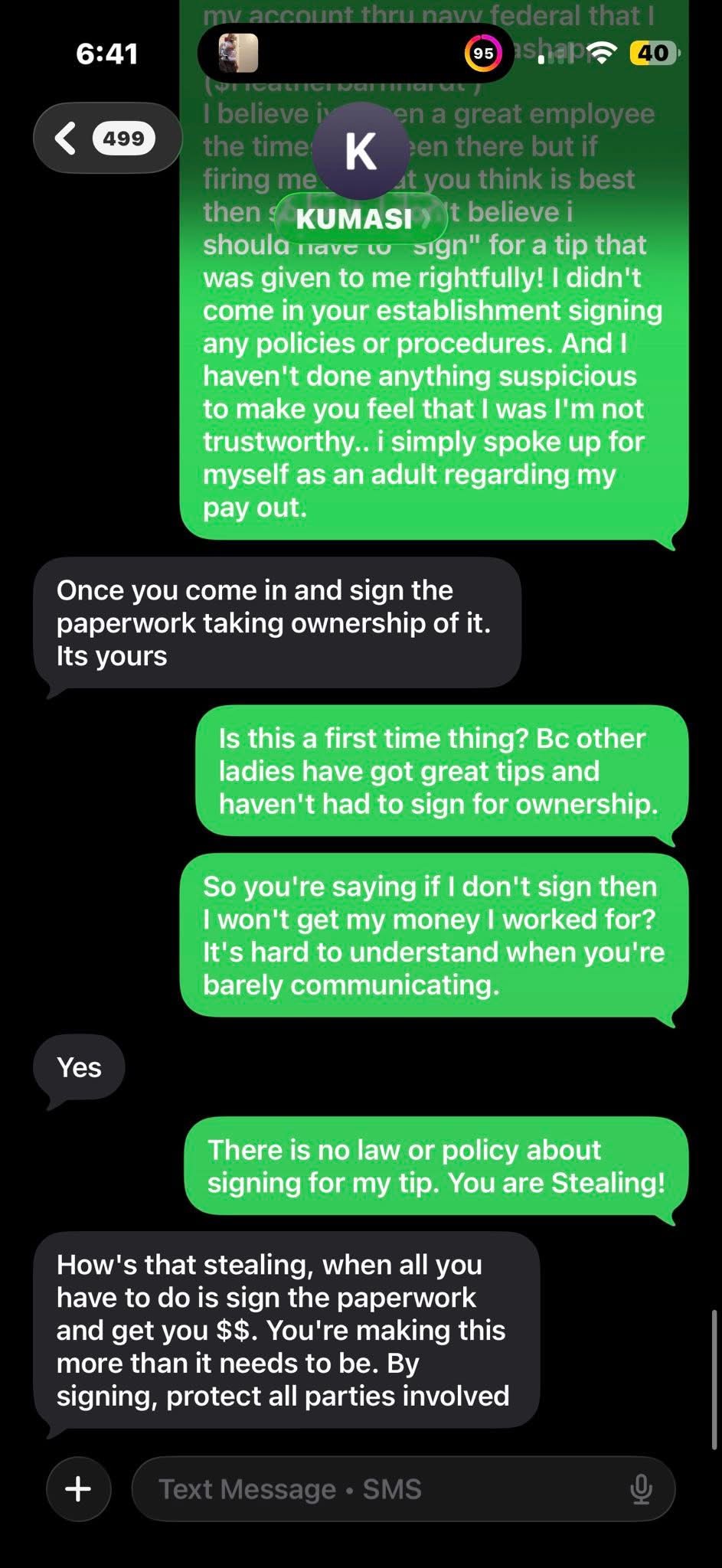
Thompson says on March 20, the day she was told the issue would be resolved, she still didn’t receive the $500. On March 21, she reached out again — and says she was told the only way to receive her money was to sign an “ownership form.”
She says that form would make her responsible if the customer later disputed the charge.
She refused.
Saying it was never part of any agreement, never disclosed beforehand, and not something other employees were required to do.
READ TEXT MESSAGES BELOW:
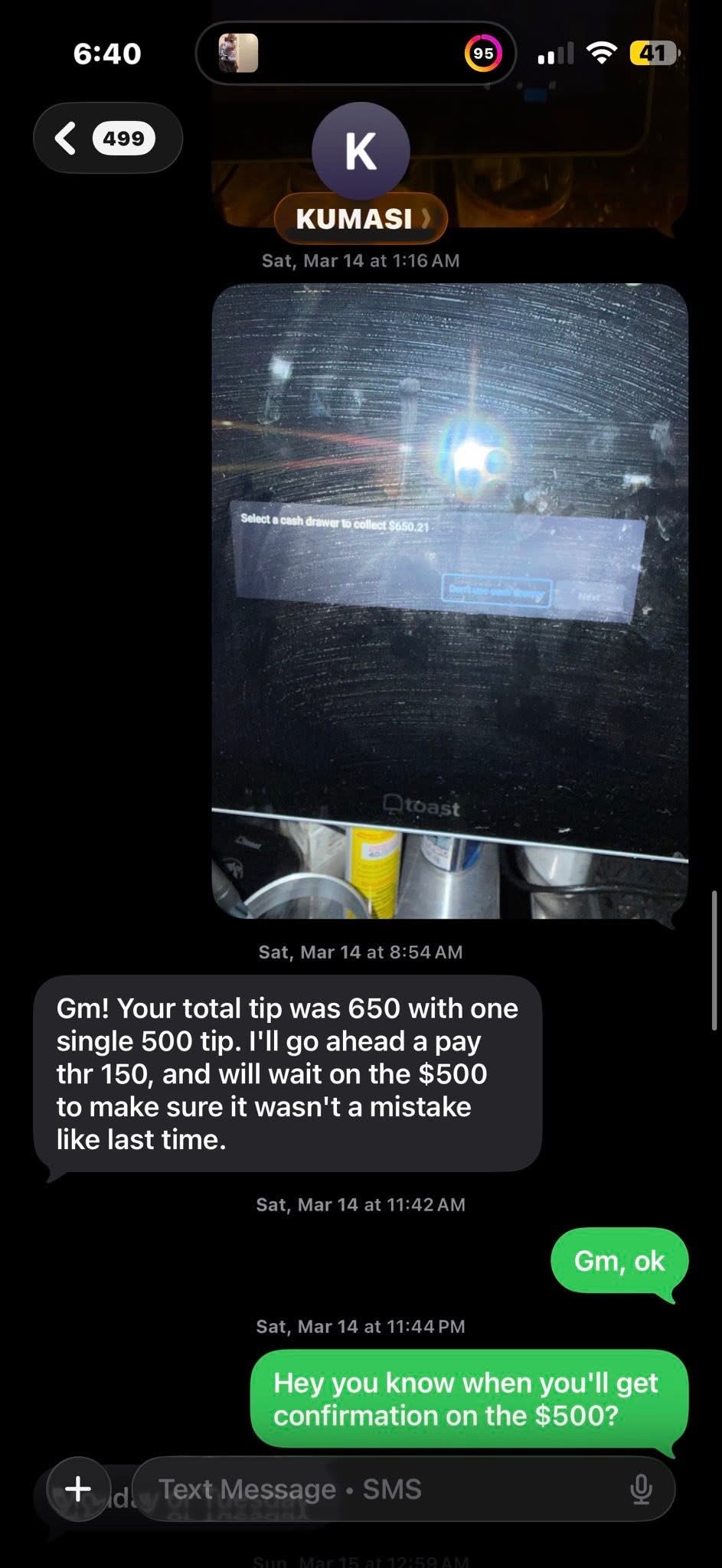
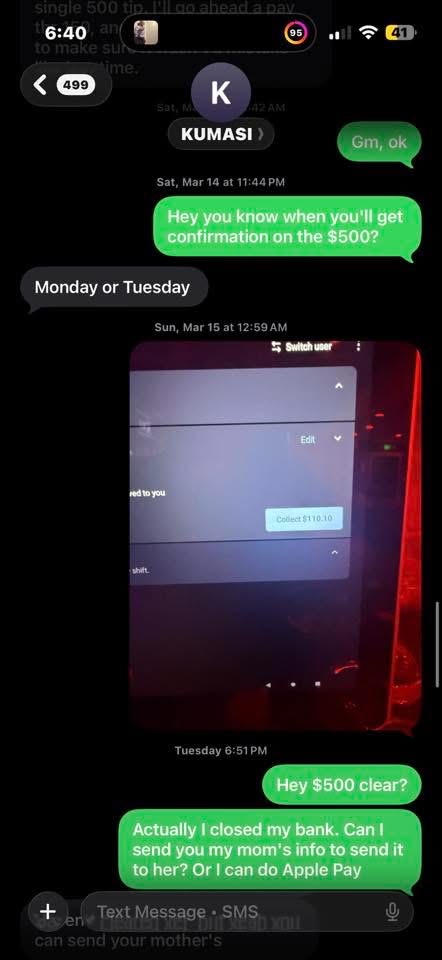
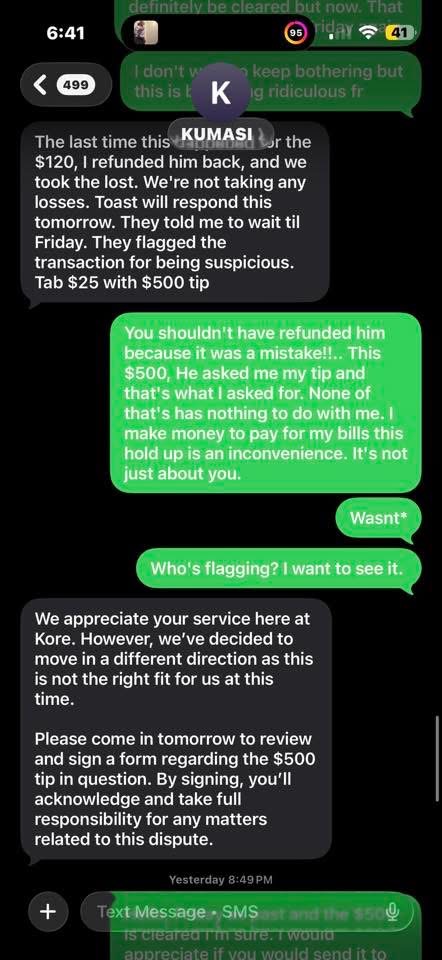
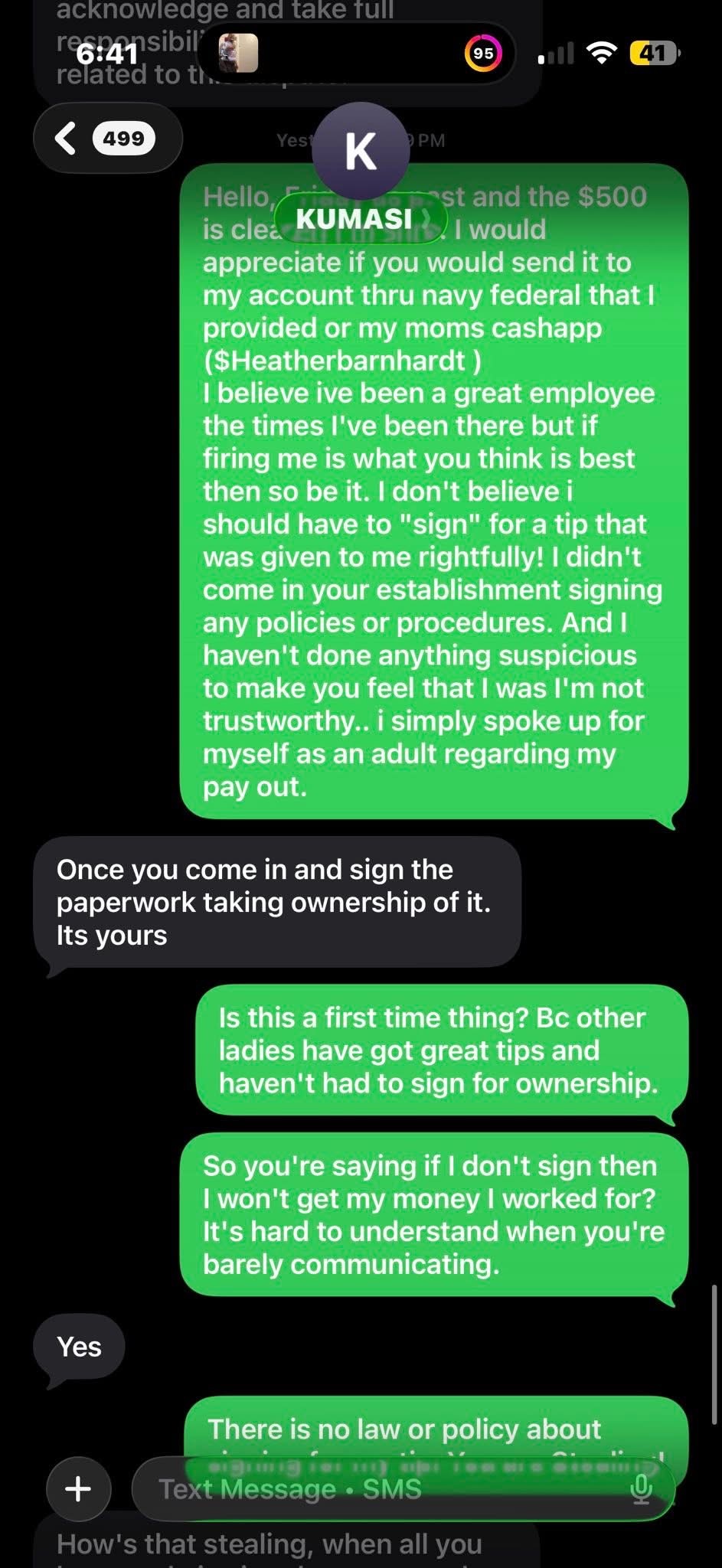
KoreDurham is telling a different story.
In a statement to The North Carolina Beat, co-owner Kumasi Stallings said the business acted out of caution — not bad intent — explaining that a $500 tip on a $25 tab is highly irregular and carries a strong risk of chargebacks.
He stated the transaction was flagged for review and that in certain high-risk situations, additional documentation may be required to protect the business.

He also said the company is still reviewing the matter and working toward a resolution.
But here’s where things get uncomfortable.
Under N.C. Gen. Stat. § 95-25.6, employers are required to pay all wages — including tips — on the regular payday. And under 13 NCAC 12 .0303, tips are considered the property of the employee, not the business.
So if payment is being delayed, or worse — conditioned on signing a document after the work has already been done — serious legal questions come into play.
Even with fraud concerns, businesses don’t get unlimited time to hold someone’s money. And they don’t get to rewrite the rules after the shift is over.
Right now, the biggest question still hasn’t been answered:
Where is the $500?
Thompson says she hasn’t received it, hasn’t seen proof it didn’t clear, and hasn’t been shown any evidence the customer disputed the charge.
She says her next step is a lawsuit.