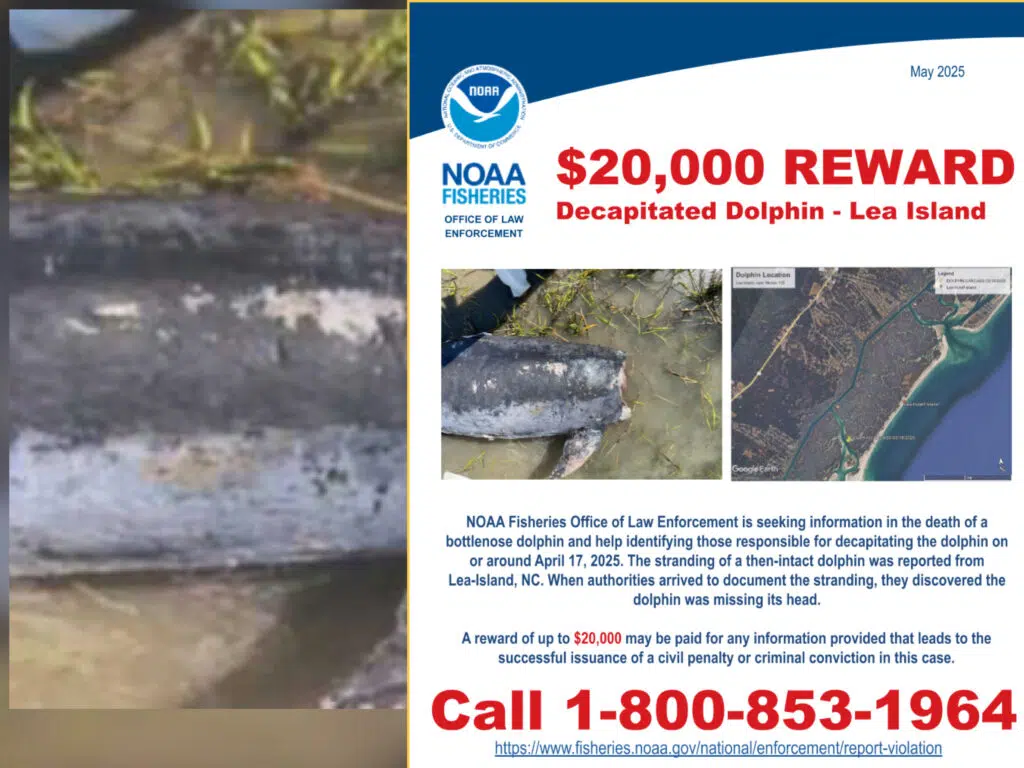

Federal officials are sounding the alarm after a decapitated dolphin was found on a quiet North Carolina beach — and they’re putting $20,000 on the line to catch whoever did it.
On April 15, a member of the public stumbled across a grisly scene on Lea-Hutaff Island, a remote and boat-only barrier island just north of Wilmington. Lying on the sand was an 8-foot-long bottlenose dolphin — its head brutally removed, in what authorities now confirm was an intentional act of violence.
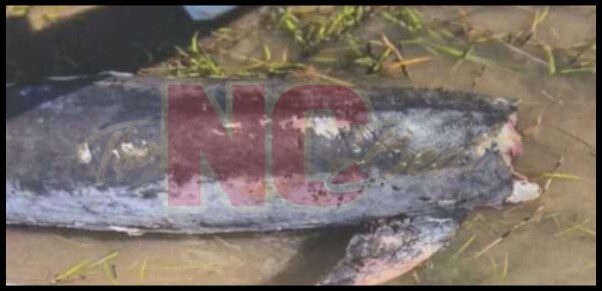
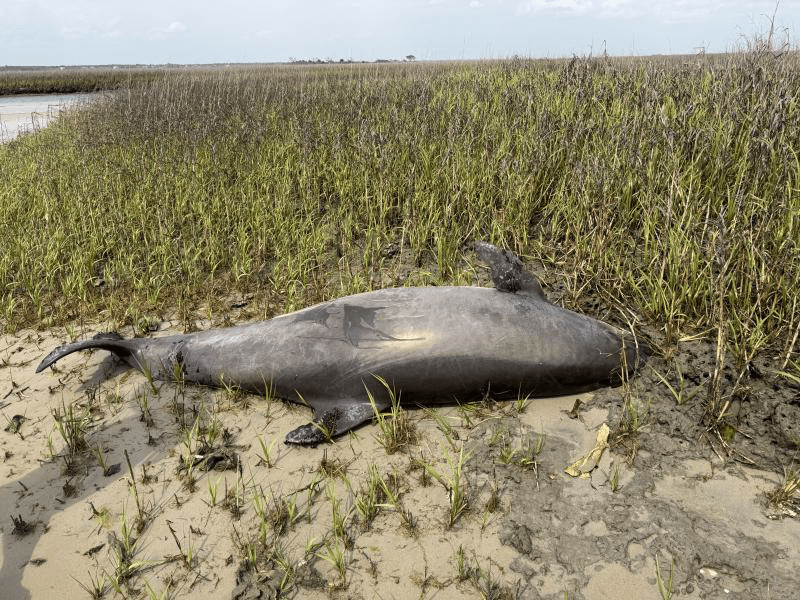
Days later, marine experts from the University of North Carolina Wilmington arrived to examine the body and found clear evidence of human-inflicted mutilation.
“This isn’t just disturbing — it’s criminal,” said officials with the National Oceanic and Atmospheric Administration (NOAA), which is leading the investigation.
Federal Law Violated – And Big Penalties Await
NOAA says the act violates the Marine Mammal Protection Act, a federal law that bans harming or harassing marine mammals. Those found responsible could face up to $100,000 in fines and one year in jail per offense.
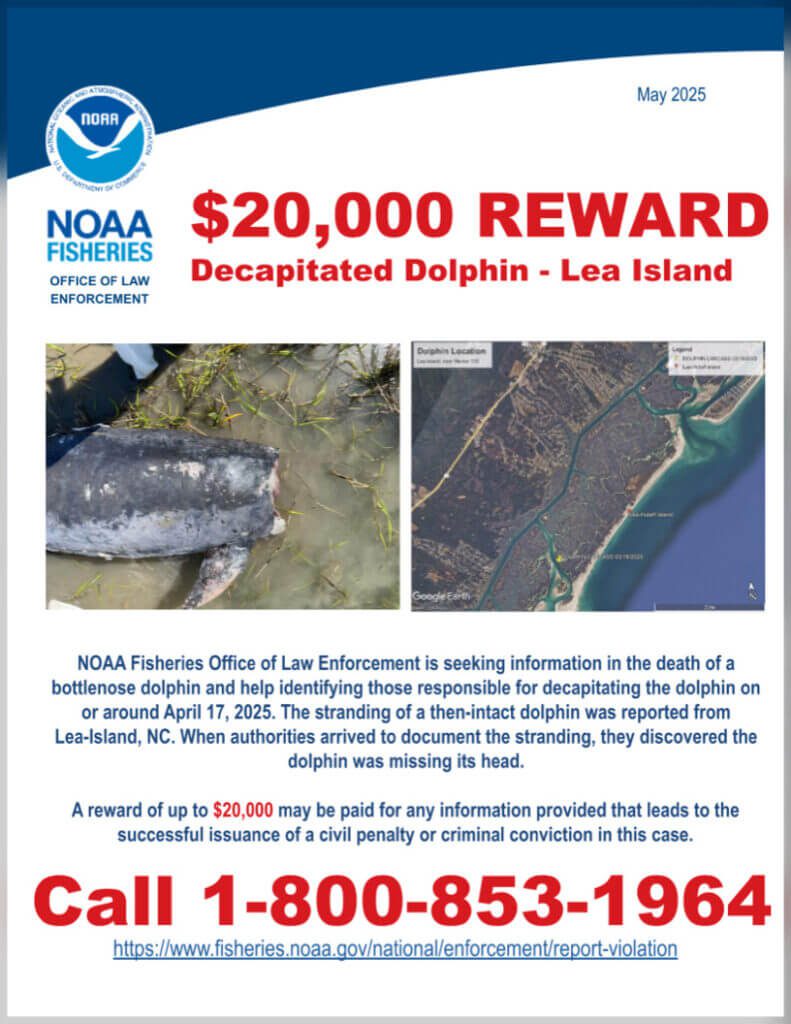
The agency is now offering a $20,000 reward for any tip that leads to a criminal conviction or civil penalty. Call the NOAA Enforcement Hotline at (800) 853-1964 if you have any leads.
But That’s Not All — The Decapitated Dolphin May Have Carried a Human-Infecting Disease
As if the decapitation wasn’t disturbing enough, experts believe the dolphin was infected with Brucella, a bacterial disease that can spread to humans through contact. The infection, which causes brucellosis, is known to affect reproductive and neurological systems in animals — and in people.
That revelation raises even more alarm about whoever handled the animal.
About Lea-Hutaff Island — And Why This Matters
Lea-Hutaff Island is one of North Carolina’s last untouched barrier islands — a sanctuary for migrating birds, nesting sea turtles, and diverse marine life. Its remoteness makes this case even more disturbing.
NOAA and conservationists are urging the public to stay vigilant and report suspicious activity in coastal wildlife areas.